

The global economic landscape is undergoing an unprecedented transformation driven by a convergence of advanced technologies. Industries that once relied on linear supply chains and traditional manual labor are being forced to reinvent themselves to remain viable. Becoming future-ready is no longer a long-term aspiration; it is an immediate operational necessity. Companies that fail to integrate innovation into their core business models risk swift obsolescence in an increasingly digital marketplace.
Modern industrial evolution is defined by agility, data-driven intelligence, and sustainability. By leveraging cutting-edge tools, forward-thinking sectors are transforming their operational frameworks to build resilience against economic volatility, labor shortages, and resource scarcity. This shift is not confined to tech-native sectors; traditional industries like manufacturing, healthcare, logistics, and agriculture are experiencing profound systemic upgrades.
Smart Manufacturing and the Rise of Autonomous Factories
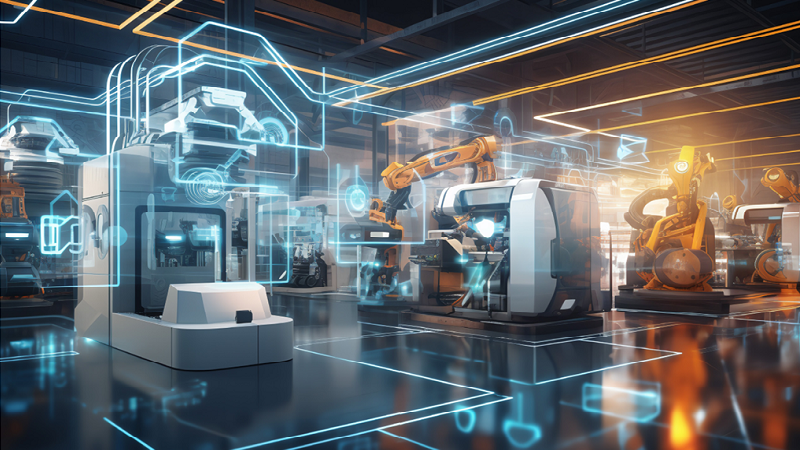
Manufacturing has evolved far beyond the assembly lines of the past. The sector is undergoing a massive digitalization wave characterized by the integration of cognitive systems, connected devices, and autonomous workflows. This industrial revolution shifts production from a reactive model to an intelligent ecosystem capable of self-optimization.
The backbone of modern production facilities is the industrial internet of things, which links machinery to centralized computing networks.
-
Predictive Maintenance: Embedded sensors monitor equipment health in real time, detecting anomalies and scheduling repairs before a catastrophic failure occurs, which dramatically minimizes unplanned downtime.
-
Digital Twin Technology: Engineers create virtual replicas of physical production lines to simulate operational changes, test system stress points, and optimize layout designs without disrupting live workflows.
-
Additive Manufacturing: Advanced three-dimensional printing allows facilities to produce highly customized components on demand, reducing physical storage requirements and shortening complex global supply chains.
Transforming Healthcare Through Precision and Connectivity
The medical and healthcare industries are transitioning away from a generalized approach to wellness toward an era defined by hyper-personalization and proactive intervention. Advanced computing power and network capabilities allow healthcare providers to collect, analyze, and deploy patient data with unprecedented accuracy.
Genomic sequencing and sophisticated data analysis allow medical professionals to tailor pharmaceutical treatments and interventions to an individual’s unique biological makeup. Beyond personalized medicine, the physical delivery of care has expanded past the walls of traditional clinics. Remote patient monitoring devices continuously track vital statistics for high-risk patients, transmitting critical data directly to electronic health records. This continuous data flow enables early detection of physiological distress, allowing doctors to adjust treatments long before an emergency room visit becomes necessary.
Intelligent Logistics and Resilient Supply Chains
Global distribution networks have faced severe stress tests over recent years, prompting a widespread push toward structural optimization. Future-ready logistics providers are moving away from siloed tracking systems toward fully transparent, synchronized supply chain ecosystems.
Autonomous ground vehicles and warehouse robotics are redefining fulfillment centers by handling repetitive sorting, picking, and packing duties with flawless precision. Concurrently, predictive analytics engines evaluate vast datasets including weather patterns, port congestion reports, and consumer demand trends to dynamically reroute shipments. This predictive agility allows logistics firms to anticipate supply bottlenecks and automatically secure alternative transit routes, ensuring goods move efficiently across borders despite external disruptions.
Precision Agriculture and Sustainable Food Systems
With a rising global population and shrinking arable land, the agricultural sector faces the complex challenge of increasing crop yields while minimizing environmental degradation. The solution lies in precision agriculture, a methodology that replaces broad, uncalculated farming practices with targeted, data-backed interventions.
-
Autonomous Agricultural Machinery: Self-driving tractors and harvesters utilize precise positioning data to cultivate fields along optimal pathways, reducing soil compaction and fuel consumption.
-
Unmanned Aerial Vehicles: Drones equipped with multispectral imaging sensors survey thousands of acres of farmland in minutes, pinpointing exact localized zones affected by nutrient deficiencies, pest infestations, or dehydration.
-
Targeted Resource Application: Variable-rate application technology allows farmers to apply water, fertilizers, and crop protection products only where needed, preventing chemical runoff and conserving vital resources.
The Decarbonization of Energy and Smart Infrastructure
Transitioning to a future-ready state requires a structural overhaul of energy generation and urban infrastructure. The historical reliance on centralized fossil-fuel power grids is giving way to decentralized, intelligent energy systems capable of managing diverse renewable inputs.
Smart grids utilize machine learning to balance the inherent variability of solar, wind, and hydroelectric power against fluctuating commercial and residential demands. Large-scale battery storage facilities capture excess energy during peak generation hours and release it during periods of high demand. Simultaneously, urban environments are embedding sensors into municipal systems, creating smart cities where traffic lights adapt dynamically to real-time traffic volume, building systems optimize heating and cooling based on occupancy, and water networks detect leaks instantly to reduce urban waste.
Cultivating a Future-Ready Workforce
The successful deployment of sophisticated technology relies entirely on human capability. As automation assumes routine technical and administrative tasks, the nature of human labor is shifting toward higher-level strategic, creative, and analytical functions.
Organizations looking to safeguard their future must invest heavily in internal upskilling and reskilling initiatives. Workers must develop a high degree of technological fluency to operate alongside intelligent systems, collaborate with advanced software interfaces, and interpret complex data outputs. Furthermore, soft skills like critical thinking, emotional intelligence, and cross-disciplinary problem-solving are becoming the primary markers of high-value talent, ensuring the workforce remains adaptable in a rapidly shifting corporate landscape.
Frequently Asked Questions
What role does edge computing play in future-ready industrial operations?
Edge computing processes data directly on local devices, such as factory sensors or autonomous vehicles, rather than routing it to a distant centralized server. This localized processing eliminates latency, allowing machinery to make split-second autonomous decisions that are critical for safety and operational efficiency.
How does technology help traditional industries address widespread labor shortages?
Technology addresses labor deficits by automating dangerous, repetitive, and mundane tasks through robotics and software. This shift allows existing employees to elevate into managerial or technical roles, maximizing organizational output even when the physical headcount decreases.
What is a circular economy and how does innovation support it?
A circular economy focuses on eliminating waste by continually recycling, refurbishing, and reusing materials within the production loop. Innovation supports this model through the development of biodegradable materials, advanced sorting technologies, and tracking software that monitors a product’s lifecycle from creation to recycling.
Why is cyber security considered a core pillar of modern industrial innovation?
As physical industrial equipment becomes increasingly connected to digital networks, the vulnerability to cyber attacks grows. Protecting intellectual property, preventing unauthorized infrastructure manipulation, and securing proprietary customer data require cybersecurity measures to be built into new technologies from the ground up.
How do predictive analytics benefit corporate risk management frameworks?
Predictive analytics leverage historical operational data and machine learning to forecast future market shifts, equipment failures, and consumer behavior trends. This foresight allows businesses to implement preventative strategies, adjust financial reserves, and secure supply chains before risks materialize into costly disruptions.
In what ways does virtual reality impact modern employee training programs?
Virtual reality creates highly realistic, immersive simulations where employees can practice high-risk tasks, such as industrial machinery repair or complex medical procedures, in a completely safe digital environment. This interactive approach accelerates the learning curve, reduces training costs, and eliminates the risk of workplace injuries.