

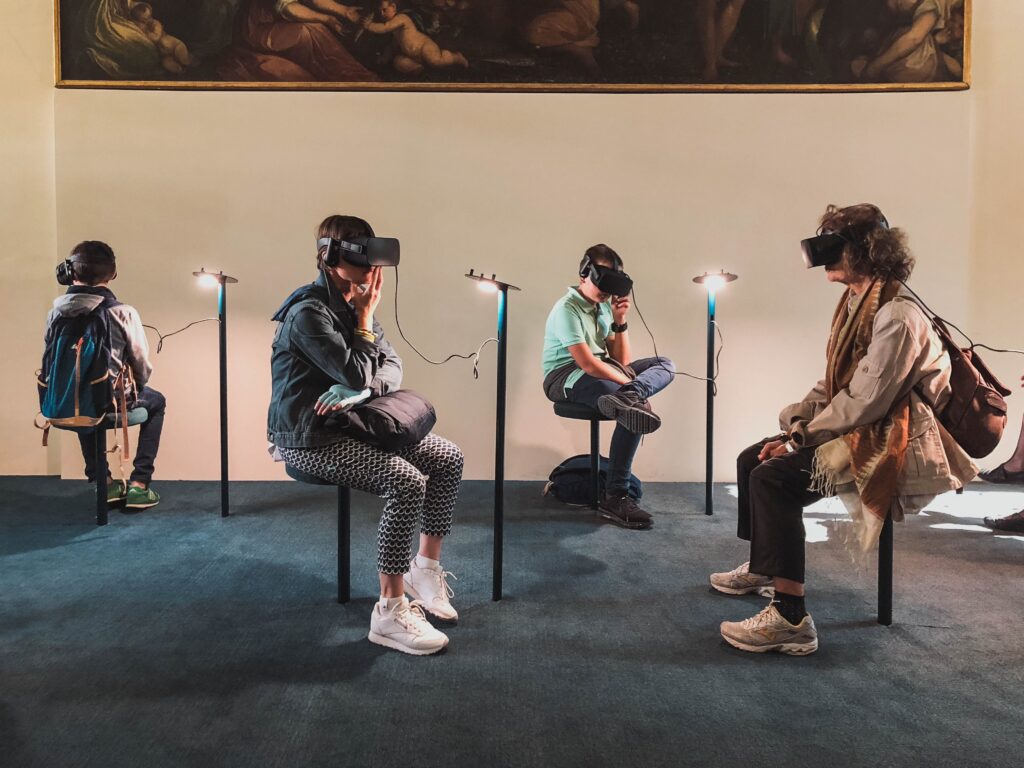
Creative teams often review successful activations when planning a new campaign. Examples can provide useful insight, but businesses should examine why an experience worked rather than copying its visual appearance. Audience, timing, brand relevance, and operational execution may be more important than the most visible feature.
Studying real-world experiential marketing examples can help creative teams understand how brands use immersive environments and interactive activities to capture attention. These examples also offer inspiration for developing campaigns around specific marketing objectives.
Identify the Objective
The first question should be what the original campaign was designed to accomplish. It may have focused on product trial, social reach, lead generation, customer loyalty, or brand repositioning.
The same creative idea can produce different results depending on the objective.
Businesses should separate visible popularity from commercial relevance. A campaign that generated many photographs may still have performed poorly against a sales objective.
Examine the Audience
Successful experiences often reflect a specific understanding of their participants. The location, activity, language, and cultural references may have been chosen for that audience.
A concept developed for entertainment fans may not transfer to a professional conference.
Companies should identify which audience insight made the original campaign relevant and determine whether a comparable insight exists in their own market.
Understand the Participation Mechanism
Experiential campaigns invite people to do something. The participation may involve testing, creating, competing, exploring, learning, or sharing.
Study how quickly visitors could understand the activity and what motivated them to participate.
A strong mechanism is usually simple enough to explain while offering enough interest to reward involvement.
Review Brand Relevance
The experience should reinforce something distinctive about the brand, product, or customer relationship.
When the brand connection is weak, participants may remember the activity but forget who created it.
Businesses should ask whether the concept would make equal sense for a competitor. If it would, the idea may require stronger strategic alignment.
Consider the Setting
Location affects audience access, atmosphere, logistics, permissions, and cost.
An activation in a public square operates differently from one inside a controlled conference environment. Weather, noise, security, traffic, and venue restrictions may influence the experience.
The setting should be evaluated as part of the concept rather than treated as a neutral background.
Analyze Production Complexity
Finished campaign photographs rarely reveal the work required behind the scenes. An activation may involve structural engineering, fabrication, technology, shipping, permits, staffing, and rehearsals.
Businesses should estimate whether they have the time and resources to execute a similar level of complexity.
Simplifying a concept can preserve its central idea while making it more reliable and affordable.
Study Visitor Flow
Visitor capacity influences the number of people who can participate. A highly personalized interaction may take several minutes per person.
Businesses should examine entry, waiting, orientation, participation, and exit. Queue management can affect both satisfaction and total reach.
The ideal level of throughput depends on the objective.
Evaluate Social Extension
Some experiences are designed to produce content that participants want to share. The visual hook, personal relevance, and ease of capture all matter.
Social success should not be assumed. Businesses should determine why people would share the experience and how the brand remains visible.
Content moderation and usage permissions may also be necessary.
Investigate Measurement
Public case studies may emphasize positive results while providing limited information about costs or methodology.
Businesses should review which metrics were reported and whether they match the stated objective. Attendance, social impressions, leads, trials, and revenue influence measure different outcomes.
Internal campaign planning should define measurement more rigorously than promotional summaries often do.
Adapt Instead of Copying
Copying another activation can make a brand appear unoriginal and may create intellectual-property concerns.
The useful approach is to extract principles. A campaign may demonstrate the power of personalization, multi-sensory design, unexpected location, or simple participation.
Those principles can then inform a new idea grounded in the company’s own audience and message.
Build an Internal Reference Library
Teams can document examples by objective, format, audience, technology, scale, and measured outcome.
This creates a practical resource for future planning. Notes should explain lessons rather than collect only attractive images.
Over time, the library can include the company’s own campaigns and post-event findings.
Final Thoughts
Experiential examples are valuable when they are treated as strategic case studies. Businesses should examine the objective, audience, participation, brand connection, production, and measurement behind each campaign.
The aim is not to recreate another company’s success. It is to learn how strong experiences are built and apply those principles to a new, original concept.